
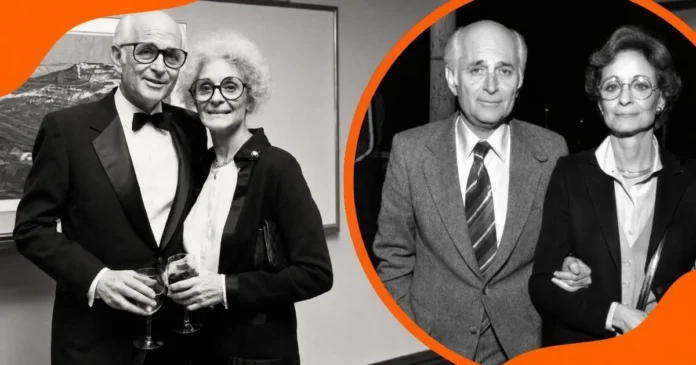

Frances Lear lived a life that could not be reduced to one famous marriage. For years, many people knew her mainly as the former wife of legendary television producer Norman Lear. But behind that label was a woman who survived deep personal pain, rebuilt her identity, and turned her later years into a bold public mission.
Born in 1923 and adopted as a baby, Frances Lear grew up with instability, loss, and private trauma. Her early life was marked by her adoptive father’s suicide during the Great Depression and later claims of abuse that she described in her memoir. These experiences shaped her, but they did not define the end of her story.
In midlife, she became a feminist activist, writer, publisher, and philanthropist. Her most famous achievement was Lear’s Magazine, a publication created for women over 40 at a time when mainstream media often treated ageing women as invisible. Frances Lear used money, influence, and pain as fuel for reinvention and that is why her story still feels powerful today.
Quick Bio
| Field | Details |
|---|---|
| Full Name | Frances Lear |
| Date of Birth | 14 July 1923 |
| Birthplace | Hudson, New York, United States |
| Date of Death | 30 September 1996 |
| Age at Death | 73 years |
| Nationality | American |
| Profession | Writer, feminist activist, philanthropist, publisher |
| Famous For | Founder of Lear’s Magazine, a publication created for women over 40 |
| Magazine Founded | Lear’s Magazine |
| Former Spouse | Norman Lear, American television producer |
| Children | Two daughters, Kate Lear and Maggie Lear |
| Autobiography | The Second Seduction |
| Key Causes | Women’s rights, mental health awareness, social change, older women’s representation |
| Legacy | Frances Lear is remembered as a woman who rebuilt her identity, challenged media stereotypes, and gave mature women a stronger public voice. |
The Difficult Early Life Behind Frances Lear’s Public Image
Frances Lear was born in Hudson, New York, and was adopted at 14 months by Herbert and Aline Loeb. Her birth name was Evelyn, but her adoptive family renamed her Frances. Her childhood soon became difficult after her adoptive father died by suicide when she was still young.
She later attended boarding schools and briefly studied at Sarah Lawrence College before leaving as a teenager. In New York, she worked in retail and advertising, building survival skills long before she became a public figure.
These early struggles gave her a sharp awareness of identity, power, and silence. They also helped explain why she later became so committed to women’s rights, mental health awareness, and public honesty about subjects many people avoided.
Marriage, Identity, and the Search for a Voice
Frances Lear married Norman Lear in the 1950s, and the couple had two daughters. While Norman Lear became one of the most important names in American television, Frances often felt overshadowed by his fame. Norman’s hit shows, including All in the Family and Maude, made him a cultural force, while she struggled with the limits placed on many wives of powerful men.
Her life changed as the women’s movement grew. She became active in feminist causes, supported the Equal Rights Amendment, worked with the National Organization for Women, and helped create an executive search firm focused on placing women in professional roles.
For Frances Lear, feminism was not just a political idea. It was personal. It gave her language for the frustration of being seen but not fully recognised.
How Lear’s Magazine Changed the Conversation
In 1988, Frances Lear launched Lear’s Magazine, aimed at “the woman who wasn’t born yesterday.” The magazine spoke directly to women over 40, combining politics, finance, health, fashion, culture, and personal reinvention. Its first issue arrived with strong attention from the media and a circulation base of 250,000.
At the time, this was a daring idea. Many women’s magazines focused heavily on youth, beauty, and traditional lifestyle themes. Lear wanted to challenge that. She believed older women were intelligent, desirable, creative, and commercially powerful.
The magazine later struggled with costs and advertising pressure. It closed in 1994, despite reaching a circulation of around 500,000. Still, its cultural importance remains clear. Lear’s Magazine helped push a conversation that media brands continue to explore today: how to represent women beyond youth.
Why Frances Lear’s Legacy Still Matters
Frances Lear died of breast cancer in 1996 at age 73, but her influence did not disappear. Her openness about manic depression, alcoholism, abuse, and personal crisis made her one of the public figures willing to connect private suffering with public advocacy.
Her legacy also gained renewed attention after Norman Lear’s death in 2023, when many reflections on his life noted Frances as more than a former spouse — as a publisher and force in her own right.
Today, Frances Lear stands as a complex figure: ambitious, difficult, generous, wounded, and visionary. Her life reminds us that reinvention is not always graceful. Sometimes it is messy, expensive, dramatic, and deeply human.
Conclusion
Frances Lear was not simply a famous producer’s former wife. She was a survivor, a feminist, a media risk-taker, and a woman determined to be recognised on her own terms.
Her story still matters because it speaks to identity, ageing, courage, and the need for women’s voices at every stage of life. Frances Lear turned pain into purpose and in doing so, she left behind a legacy that still deserves to be seen.
Also read: Who Is Chris Rodstrom, Pat Riley’s Private Yet Influential Wife?
(FAQs)
Who was Frances Lear?
Frances Lear was an American writer, feminist activist, philanthropist, and magazine publisher. She is best known for founding Lear’s Magazine, which focused on women over 40.
Was Frances Lear married to Norman Lear?
Yes. Frances Lear was married to television producer Norman Lear for nearly three decades. Their marriage ended in divorce in the 1980s.
What was Lear’s Magazine about?
Lear’s Magazine was created for mature women, especially women over 40. It covered politics, money, health, fashion, culture, and personal growth.
Why is Frances Lear important?
She is important because she challenged the way media ignored older women. She also spoke openly about mental health, trauma, feminism, and identity.
Did Frances Lear write a book?
Yes. Frances Lear published her autobiography, The Second Seduction, in 1992. In it, she discussed her childhood, relationships, mental health, and personal struggles.
When did Frances Lear die?
Frances Lear died on September 30, 1996, in New York City. She had breast cancer.