
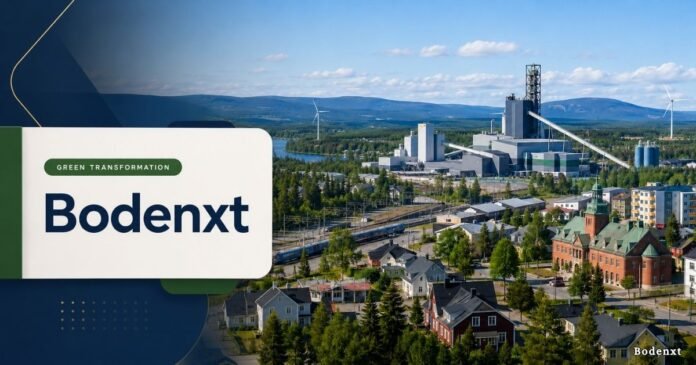

Most stories about Boden’s transformation begin with green steel. Yet the more difficult work is happening beyond the factory site. Homes, classrooms, roads and public services must be ready for a community that could look very different within a few years.
This is where Bodenxt comes in. It gives the Municipality of Boden and its partners a practical way to handle several changes at once. The aim is not simply to attract investment, but to make that investment useful for residents, workers and local businesses over the long term.
Bodenxt Looks Beyond the Factory
Bodenxt is a working model rather than a single construction project. It brings together municipal departments, public organisations and businesses. Shared planning helps them respond when one decision creates needs elsewhere.
The platform concentrates on four connected subjects: housing and living, infrastructure, workforce skills and business development. A company may be ready to hire, for instance, but recruitment becomes difficult if workers cannot find homes. In the same way, new housing creates pressure if schools, water services and transport are not prepared for more people.
Stegra Made the Challenge More Urgent
Stegra, which was previously named H2 Green Steel, selected Boden for a major steel facility powered by renewable electricity and green hydrogen. The production method is intended to replace much of the coal used in conventional steelmaking. According to the company, this could reduce carbon emissions by as much as 95 per cent.
The environmental goal is important, but the local effect is equally significant. Building and operating the facility requires contractors, engineers, technicians, electricians and many other workers. Some can be recruited locally, while others will arrive from elsewhere in Sweden or abroad. Each new arrival adds to the need for accommodation, transport and everyday services.
New Jobs Also Bring New Neighbours
A job offer is only one part of a person’s decision to move. People also ask whether they can afford a suitable home, find a school for their children and enjoy a comfortable life outside working hours. If those basic needs are missing, attracting workers becomes harder and keeping them may be harder still.
Boden therefore needs different forms of housing. Contractors may require temporary rooms, while permanent staff need flats and family homes. Childcare, healthcare, shops and leisure facilities must grow as well.
Training and Infrastructure Must Develop Together
Technical education and vocational training can help current residents prepare for new industrial work. Cooperation between employers and education providers can keep courses focused on skills that are genuinely needed.
Meanwhile, physical systems must cope with heavier use. Roads, rail connections, electricity supplies, water networks and waste services all have limits. Improving them at the right time can support industrial activity while also making daily life more reliable for the wider community.
What Growth Could Mean for Local Businesses
The benefits of a large investment can spread well beyond the company making it. New residents need food, furniture, transport and entertainment. Industrial sites also purchase maintenance, construction, cleaning and professional services. This creates openings for established businesses and for people considering a new venture.
However, economic opportunity does not remove every concern. Residents may worry about traffic, rising housing costs or changes to familiar neighbourhoods. Regular communication matters because local knowledge can reveal problems that are easy to miss on a development plan.
Conclusion: Why Bodenxt Deserves Attention
Bodenxt is an attempt to manage growth as a community issue rather than an industrial one. Its value lies in connecting decisions that might otherwise be made separately. Housing, training, infrastructure and business support are treated as parts of the same transformation.
There will still be difficult choices as Boden develops. Plans may need to change when population numbers, construction schedules or local needs shift. Even so, a coordinated approach gives the municipality a clearer chance to turn rapid industrial expansion into a town where people can build lasting lives.
Frequently Asked Questions
What is Bodenxt?
Bodenxt is a collaborative development model created to coordinate the wider changes taking place in Boden.
Is Bodenxt a steel company?
No. It is a community-development platform, while Stegra is the company developing the green steel facility.
What are Bodenxt’s main areas of work?
Its main areas are housing and living, infrastructure, workforce skills and business development.
Why does Boden need more housing?
Industrial growth is attracting contractors, permanent employees and families who require both temporary and long-term accommodation.
How can residents benefit from Bodenxt?
Better planning can connect new jobs with training, housing, reliable services and opportunities for local businesses.