
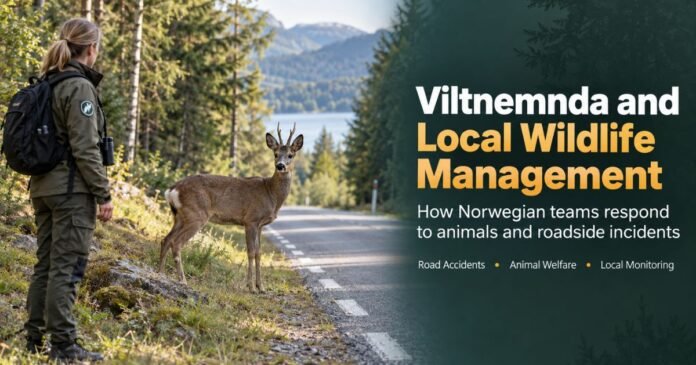

A wild animal injured beside a road creates a difficult situation. Drivers may want to help, but getting close could frighten the animal or place people in danger. In many Norwegian municipalities, Viltnemnda is the name connected with the local wildlife authority that helps manage cases like this.
The service is not organised in exactly the same way across Norway. Some municipalities may have a committee, while others give the work to local officers or authorised wildlife teams. Their responsibilities can include road accidents, injured animals, hunting administration, and the observation of local species. The main idea is simple: wildlife problems should be handled by people who understand the animals and the surrounding area.
Why Viltnemnda Exists in Norwegian Municipalities
Norway contains forests, farmland, mountain areas, and long roads that pass through animal habitats. Deer, elk, and other wild animals may cross these roads or appear near homes. Most encounters end without trouble, but some require a quick and careful response.
A local wildlife service is useful because its members usually know the area well. They may understand where animals often cross, which routes search teams can use, and which landowners need to be contacted. This local knowledge can be especially valuable when an injured animal disappears into woodland after a collision.
The Work Goes Beyond Injured Animals
Responding to wounded wildlife is only one part of the job. The responsible authority may also deal with hunting matters, collect local wildlife information, and monitor the movement or number of certain species. These tasks help the municipality understand what is happening in its forests and rural areas.
Reports from hunters, farmers, drivers, and residents can provide useful information. For example, repeated sightings near a busy road may point to a regular crossing place. A sudden increase in animals entering farmland may also require attention. The authority can review each situation and decide whether advice, monitoring, or direct action is needed.
Not every animal seen near a house is in distress. A healthy animal may simply be passing through its usual surroundings. People should avoid feeding or chasing it, as both actions can change its behaviour and create a larger problem.
What Happens After a Wildlife Road Accident?
After a collision, the first concern is human safety. The driver should stop in a secure place, report the incident, and explain where it happened. Details such as the road name, a nearby sign, the direction of travel, and the type of animal can help responders reach the right location.
An injured animal does not always remain beside the road. It may run into a field or forest even when badly hurt. In that case, an authorised search team may follow its trail, sometimes with a trained dog. Members of the public should not attempt to track it because a wounded animal may behave unexpectedly.
The response can involve several people, including municipal workers, police officers, hunters, tracking teams, and landowners. Each has a particular role, and good communication helps the case move forward without unnecessary delay.
Conclusion
Viltnemnda gives Norwegian municipalities a practical way to handle wildlife concerns close to where they happen. Its work may begin with a road accident, but it can also cover hunting duties, local monitoring, and advice for residents. By bringing together trained teams, authorities, and landowners, it helps protect the public while ensuring that wild animals are treated responsibly.
Frequently Asked Questions
1. What does Viltnemnda mean?
It generally means a local Norwegian wildlife committee or municipal authority dealing with wildlife matters.
2. Is it a national organisation?
No. Its structure and working arrangements can vary between municipalities.
3. Can it respond to an injured wild animal?
Yes. The local authority may assess the report and arrange for trained personnel to attend.
4. Should I move an injured animal away from the road?
No. Keep a safe distance and follow the instructions given by the police or local service.
5. Does it also deal with hunting?
In some municipalities, its responsibilities include hunting administration and wildlife population management.