
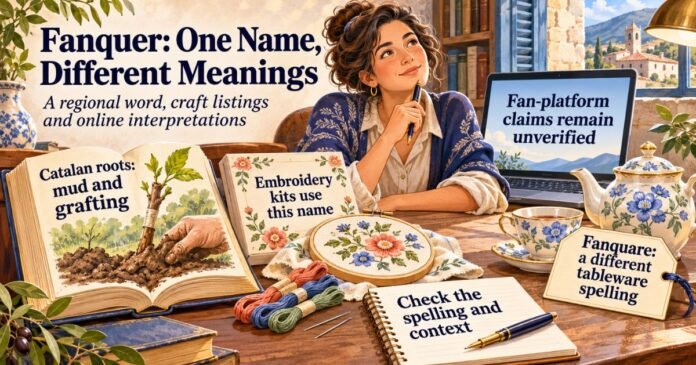

A search that begins with one unfamiliar word can quickly become confusing. One result describes passionate fans, another shows embroidery supplies, and a slightly different spelling brings up decorative tea sets. The pages may look relevant, but they are not necessarily discussing the same thing.
Fanquer is a useful example of why context matters. The spelling has a documented regional meaning in Catalan, appears on craft product listings and has attracted several interpretations in online writing. Treating all these uses as one subject creates more confusion than clarity.
The detail that may surprise readers is its connection with mud and traditional agricultural work. That recorded meaning is quite different from the fan communities and creator platforms described in some articles.
There is also Fanquare, a similar name associated with porcelain tableware. For shoppers, that small spelling difference can change the entire search.
Understanding the name means looking at each use on its own terms. A dictionary entry, a retail listing and a discussion about internet culture offer different kinds of information—and each answers a different need.
The Recorded Meaning of Fanquer
The Diccionari català-valencià-balear records the word as a regional Catalan noun associated with Mallorca.
One meaning refers to a large quantity of mud. Another describes a worker who followed someone carrying out plant grafting and applied mud to the grafts. The entry derives the word from fang, meaning mud in Catalan.
This gives the spelling a documented linguistic identity. It also makes the blanket claim that the word has no dictionary meaning inaccurate.
The agricultural definition is particularly specific. It preserves the name of a person performing one task within a traditional working process. For someone reading a regional text, that detail could explain a sentence that otherwise seems puzzling.
However, the dictionary entry does not explain every modern appearance of the name. A product seller might adopt the same letters independently, while an online writer might give them a new interpretation.
The distinction is simple: the recorded Catalan meaning is established within its regional context. Connections between that meaning and modern commercial or digital uses would need separate evidence.
Its Suggested Connection With Fan Communities
Some online articles associate the name with people who take an active role in a shared interest. These descriptions usually focus on knowledge, enthusiasm and participation.
A person might organise discussions, write guides, create artwork or help newcomers understand a subject. Their contribution becomes part of the community’s everyday activity.
Imagine a music listener who enjoys a band’s latest release. Another listener might also document concert performances, identify rare recordings and maintain a useful archive. Both are fans, but the second example shows the deeper involvement these articles describe.
The behaviour is familiar. The proposed label is less firmly established.
Some writers suggest that the name combines “fan” and “connoisseur”, implying enthusiasm supported by detailed understanding. Others propose “fan” and “conquer”, with an emphasis on influence or active participation.
Neither explanation has a confirmed origin in the information examined. They are possible interpretations offered by writers, rather than settled accounts of how the word developed.
Claims about a dedicated digital platform require similar care. Articles may describe memberships, exclusive content, community rewards or creator tools. However, the reviewed information does not establish a verified service with an identifiable operator and documented features.
Readers can understand fan engagement without accepting those platform claims. Familiar phrases such as “active fandom”, “community participation” and “dedicated supporters” already describe the underlying behaviour clearly.
Embroidery Kits and the Fanquare Spelling
Fanquer also appears as a brand name on retail listings for embroidery kits. One floral kit is advertised with patterned fabric, coloured threads, needles, instructions and an adjustable hoop.
For someone who encountered the name while browsing craft supplies, this commercial use may be the relevant answer. The listing identifies a particular type of item marketed under that spelling.
It does not establish a complete business history or demonstrate a connection with the proposed fan-community concept. A brand field on a retail page tells you how a product is labelled, while leaving other questions open.
If you are trying to locate the item again, compare the pattern, product photographs, package contents and item identifier. These details help distinguish it from similar craft kits.
The similar name Fanquare appears on porcelain tea sets and tableware. Listings include floral cups, matching saucers, teapots and serving accessories.
If the product you remember involved delicate cups or a decorative tea service, this longer spelling may be the one you intended.
There is no established business connection in the reviewed information between the embroidery listings and the tableware range. Similar spelling alone does not show that products share an owner or manufacturer.
For shoppers, checking the exact name is especially useful when finding replacement pieces, reviewing an earlier order or contacting a seller. The spelling and the product category should agree before you proceed.
Finding the Meaning That Fits Your Search
The most useful way to understand Fanquer is to return to the place where you first encountered it. A full sentence or product image often provides the clue that a broad search misses.
Follow the Original Context
In a written passage, identify the language and read the surrounding sentences. A regional expression may have a precise meaning that disappears when the word is viewed alone.
On social media, consider whether the spelling is a username, nickname or typing error. A term used by one account does not automatically have a wider definition.
In a shopping result, look at the actual item. Product photographs and packaging can quickly reveal whether the result concerns crafts, tableware or something else.
Make the Search More Specific
Add a short descriptive phrase to narrow the results. “Embroidery kit”, “Catalan meaning” and “porcelain tea set” point towards different subjects.
This helps clarify search intent and prevents unrelated explanations from dominating the results.
For a claimed app or service, look for an identifiable developer, working product documentation and clear information about the operator. An article describing features is different from evidence supplied by the service itself.
Match Each Claim to Suitable Evidence
A dictionary can support a recorded definition. A product listing can demonstrate commercial use of a name. Neither automatically proves the existence or history of a technology platform.
Repeated wording also needs perspective. Several pages sharing an explanation do not necessarily provide independent confirmation.
You do not need to resolve every possible use of the name. Once the context and supporting details match what brought you to the search, you have a practical answer.
Conclusion
Fanquer has a documented regional Catalan meaning, appears on embroidery product listings and carries several proposed interpretations in online writing. Fanquare adds a separate tableware name with a similar spelling.
The clearest explanation comes from matching the name to its setting. Check the spelling, examine the surrounding details and use evidence suited to the specific claim. A little context can save a great deal of searching.
FAQs
What does Fanquer mean?
In Mallorcan Catalan, it refers to a large quantity of mud or a worker who applied mud during plant grafting. Commercial and online uses may have different intentions.
Is it an established English slang term?
The information examined does not establish a widely accepted English slang definition. Some writers associate it with dedicated fans and active community involvement.
Does the name belong to a verified digital platform?
A verified platform with confirmed ownership and documented features has not been established in the reviewed information. Descriptions of such a service remain unconfirmed.
Is it the same as Fanquare?
The spellings differ. Fanquare appears on porcelain tableware listings, while the shorter spelling appears on embroidery products and has a recorded regional meaning.
Does the word come from “fan” and “conquer”?
That is a suggested online interpretation, rather than a confirmed origin. The regional dictionary derives the Catalan word from fang, meaning mud.
How can I identify the correct product?
Search the exact spelling alongside the product category. Compare photographs, package contents, item identifiers and seller details before selecting a listing.