
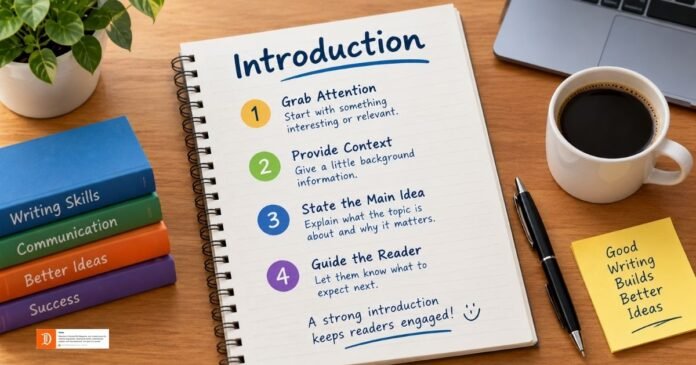

It’s the introduction that readers often see when they first open an article, essay, report or online guide. These opening words will make the first impression and decide if they continue to read. A good introduction to a piece of writing is more than a beginning. It gives some useful context and a motivation to go further.
The word Introduction is commonly used in education, journalism, academic writing, business communication, and digital publishing. The word may seem simple, but crafting a good introduction takes thought. Writers need to know their audience and select what information is relevant and how to present the main idea without overloading the reader with irrelevant detail.
In online publishing, an introduction can also help to shape the reader experience. Visitors will often scan the first few paragraphs to determine if an article will meet their need. A clear start helps them to understand the topic quickly and sets realistic expectations about what they will learn.
Knowing the purpose of an introduction can make your writing better whether you’re writing a school assignment, a professional report, a blog post, or an SEO article. Learning about its basic parts and usual pitfalls helps you make openings that seem natural, insightful and worth people’s time.
An Introduction and Why It’s Important
The introduction is the first part of a written work. Its primary purpose is to introduce the subject, provide context and prepare the reader for the main content. It can also state a central argument, explain the purpose of a report or highlight a problem that the content will address depending on the type of writing.
A good introduction allows the reader to know what he/she is about to read and why it is important. This initial guidance is essential, without it even useful information can seem confusing or disconnected.
For instance, an article on how to eat healthily may start with the importance of daily diet and then discuss practical dietary habits. Similarly, a business report might start with a market problem, then research results, and recommendations.
Structure depends on what the content is for. An academic introduction might begin with a research question or a thesis. A magazine article might begin with an interesting observation or a situation that readers can relate to. Blog introductions are generally written to address the needs of the reader and what the article will provide.
The format is unimportant; the aim is the same: to give the reader enough information to understand the subject and to motivate the reader to continue.
A Good Introduction
It doesn’t need to be complex or long to be a good intro. It has to convey the right information in a logical sequence.
A Strong Opening
The first sentence should be interesting, but not overblown. A relevant something, a situation we are all familiar with or a simple statement can work well.
Background
Some context might be necessary for the reader to understand the main subject. Include only the details needed to set that context.
Clear Central Idea
Describe the subject of this material. In an academic essay, this might be your thesis statement. In a blog post it can be a short description of the subject and its importance.
A Straightforward Path
Tell the readers what the article or document is going to be about. This allows them to see the benefit of moving forward without giving away all the details up front.
These elements should come naturally. If the introduction has too many definitions, statistics or facts that are not related the main discussion will be delayed. The best way is to give the reader a useful starting point and gently lead into the main body.
How to Write an Introduction for Various Types of Content
The best way to begin a piece of writing depends upon your audience, your topic, and your purpose.
Academic Essays and Assignments
An academic introduction usually starts with the more general topic and then narrows the discussion to a specific argument or research question. This essay will discuss the relevant context and the direction of the essay.
Students should not make vague statements that might apply to just about anything. Instead, they should clearly state the problem and provide a focused thesis that the rest of the assignment will support.
Blog Posts and SEO Articles
An online article has to get to the point fast to address the reader’s interest. Explain the topic in simple words. State the main benefit of reading. Do not have long background sections that delay useful information.
The main keyword can be used naturally in the introduction, if it describes the topic well. But writers should not repeat a phrase for the sake of keyword frequency but for the sake of clarity and readability.
For example, an article on home gardening might start by discussing how even a small space for growing can yield fresh herbs and vegetables. This could then lead into the practical methods discussed in the article.
Business Reports and Professional Documents
Purpose, context and scope are usually found in professional introductions. A report might describe the business problem being studied, why it is important, and what parts of the problem the report will look at.
This section is kept simple to help busy readers understand the document before the findings or recommendations.
Things You Should Not Do When Writing an Intro
One error is starting with a too general statement. A generic opening line about the importance of life, success or knowledge is rarely meaningful in context. A specific and relevant start usually works better.
Another problem is overloading information. The introduction should set the stage for the discussion, not spell everything out in advance. The main body is where the detailed evidence, extended examples and supporting arguments go, with few exceptions.
Writers should also not over-promise on what the content can deliver. If an introduction states that an article is a complete guide, then the article should contain enough practical information to support this statement.
When publishing online, forcing keywords can lead to unnatural sounding sentences. Use the target phrase only where it makes sense and support it with supporting language.
Finally, don’t forget to get into the body of your paper. The introduction should flow naturally into the next paragraph or heading so that the reader can follow the discussion without abrupt transitions.
Conclusion
A good introduction introduces the subject, sets the scene, and gives the reader a clear sense of why he or she should continue. The best thing is to get started with a relevant opening, explain the central idea and keep unnecessary details out of the way. A well planned Introduction can make any piece of writing easier to read and more interesting to understand, whether that is an academic essay, a business report or an article for the web.
Also read: UploadWords.com USA: Detailed Review of the Website, How It Works and Its Online Presence
Frequently Asked Questions
What Is an Introduction?
Introduction – first section of a written work. It gives the scene, the background, and introduces the main discussion.
What Makes a Good Introduction?
A good introduction will be clear, relevant and interesting. It immediately establishes the subject and gives the reader a good feel for what is to come.
How Long Is an Introduction Supposed to Be?
The optimal length depends on the content. A short blog post might be just a few sentences; a research paper might take several paragraphs for setting the context and stating the thesis.
Should an Introduction Contain the Main Keyword?
SEO articles can have the main keyword early in the intro, if it suits the topic naturally. It should never be forced into a sentence at the cost of readability.
Can You Open an Introduction With a Question?
Yes. A question may be suitable for the purpose, but for some topics a clear statement, short example or interesting observation may work better.
What Should You Not Do in an Introduction?
Avoid overly general opening statements, unnecessary details, forced keywords and promises that the content cannot fulfil. Keep the introduction relevant, clear and focused on the reader.
What Is the Difference Between a Conclusion and an Introduction?
It introduces the discussion and readies the reader for the subject. The conclusion sums up the discussion, reinforces the main ideas, and leaves the reader with a clear final thought.