
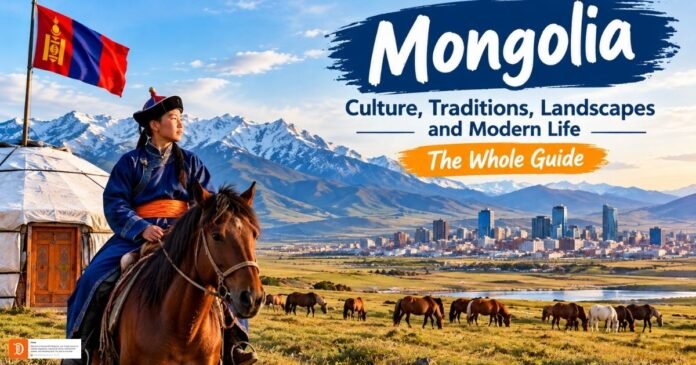

Picture a land of infinite plains receding to the horizon, and distant mountains lifting themselves. The wild horses still roam the open plains and a special niche is preserved for the traditional way of life of the nomads in modern society. This is Mongolia, an intriguing destination in East and Central Asia, with dramatic landscapes, ancient history and a unique cultural identity.
Between Russia and China, Mongolia is one of the least densely populated countries in the world. Its huge territory comprises rolling steppes, rugged mountains, arid deserts and remote valleys. These natural surroundings have, for centuries, influenced the way people live, work, travel and relate to their environment.
Mongolia is famous for its nomadic traditions and traditional round houses called gers, but the country is also undergoing major changes. Modern apartments, growing cities, better transportation and digital technology are shaping everyday life, especially in the capital Ulaanbaatar.
To understand Mongolia, you have to look beyond its famous scenery. The country’s uniqueness comes from its history, food, traditional festivals, wildlife and changing housing patterns. If you’re interested in travel, geography, culture or modern Asian societies, Mongolia is a fascinating blend of ancient traditions and modern development.
The Geography and Natural Beauty of Mongolia
Mongolia is about 1.56 million square kilometers in area, and is one of the largest landlocked countries in the world. It has a relatively low population for its size, and large areas of the countryside are sparsely populated.
The geography of the country varies significantly from one region to another. Forests, lakes and mountainous terrain are prominent in northern Mongolia, while the central sections are recognized for open grasslands that are suitable for livestock raising. Southward the Gobi Desert is a stark landscape of dry plains, rocky outcrops and sand dunes.
The Altai Mountains in western Mongolia are for those tantalizingly interested in hiking, wildlife and spectacular scenery. The country also has Lake Khövsgöl, a big freshwater lake surrounded by mountains and forests. It is an important natural attraction, due to its peaceful surroundings and clear waters.
The climate in Mongolia is extreme continental. Winters are very cold, and summers are generally short and warm. Seasonal temperature differences affect agriculture, transport and traditional ways of life.
These natural conditions have helped to shape the national character. In many rural communities families raise horses, sheep, goats, cattle and camels and livestock herding still plays an important role. The landscape is also home to wildlife such as the snow leopard, wild Bactrian camel and Mongolian gazelle.
Wide open spaces provide opportunities for camping, horse riding, wildlife viewing and exploring remote communities for travelers.
Mongolian History and Cultural Heritage
Mongolia has a long history, influenced by nomadic societies, trade and great empires. The most famous historical figure of the country internationally is Genghis Khan, who united Mongol tribes and built up an empire, which in the early 13th century covered a large part of Eurasia.
The Mongol Empire changed trade and communication across great distances. Its influence extended into parts of Asia and Europe and its place is felt in world history. Genghis Khan remains an important part of Mongolian national identity today, with monuments, museums and historical sites dedicated to his memory.
Traditional nomadic culture still affects everyday life. For many families, livestock are more than a source of income. Animals provide food, materials, transportation and a connection to generations of cultural knowledge.
One of the most recognizable elements of Mongolian heritage is the ger, a round, portable dwelling that accommodates the country’s nomadic way of life. Its construction means it can be put together and taken apart fairly quickly, making it a good choice for families who move with their animals and for seasonal grazing needs.
Traditional sports and music are also important. Mongolian throat singing is a special kind of singing that makes unusual sounds.Another important cultural instrument is the traditional horsehead fiddle, the morin khuur.
Naadam, the traditional festival of Mongolia, consists of three main competitions: wrestling, horse racing and archery. It takes place annually. These events unite communities and help to preserve cultural traditions that are still relevant in today’s world.
Mongolia’s Housing, Urban Development, and Modern Life
Mongolia is a modernizing country too, although traditional customs remain important. As cities have grown, so have people’s lives, jobs and expectations of housing and public services.
Ulaanbaatar is the country’s capital and largest city. It is the political, economic, educational and cultural center of Mongolia. Modern office buildings, shopping centers, universities, restaurants and apartment complexes exist side by side with older neighborhoods and traditional influences.
Housing is a significant part of this change. The term Oronsuuts in Mongolian usage denotes residential houses and apartments. It can be useful if you are looking at Mongolian property listings or need to know about city accommodation.
In many urban neighborhoods, people live in apartments. They have electricity, plumbing, heating systems, shops, schools, etc. But the housing situation is different according to the building, location and budget of the household.
Some live in apartment blocks and others in detached houses or ger areas on the outskirts of towns. However, such neighborhoods may have problems with infrastructure, access to services and winter air pollution, especially when households use solid fuels for heating.
The pattern of rural housing is different. Some families still live in gers, while others have moved to permanent houses. Their decisions are influenced by employment, family needs, local conditions and their livelihood being dependent on seasonal livestock herding.
That mix of old and new housing is part of a broader trend in Mongolia.Urban development creates new opportunities but also raises questions of affordability, infrastructure, environmental protection and the preservation of cultural traditions.
Food, Tourism and Everyday Life in Mongolia
Food also gives another perspective on the environmental and cultural history of Mongolia.Food in Mongolia is based on meat and milk products, a reflection of the importance of livestock in rural life.
One of the country’s most famous foods is buuz, steamed dumplings filled with meat. They are especially popular at Tsagaan Sar, the Mongolian Lunar New Year celebration. Another familiar dish is khuushuur, a fried pastry, often filled with minced meat.
Dairy products are important as well. Airag, a fermented drink made from mare’s milk, is associated with the summer season and nomadic hospitality. Other dairy foods vary from place to place and house to house.
Besides the natural attractions of Mongolia, tourism allows visitors to experience these traditions. Visitors can stay in traditional gers, visit national parks, explore the Gobi Desert and experience cultural festivals. Some trips also include horse riding and learning about pastoral life.
But Mongolia is big so traveling between places can take a lot of time.Plan your transport and expect changes in the weather and limited facilities in remote areas.
Responsible tourism is of great importance in fragile environments.By respecting local customs, reducing waste and supporting community-based businesses we can help preserve the environment and the country’s unique cultural traditions.
Conclusion
Mongolia is a unique blend of natural beauty, historical significance, nomadic culture and modern development.Its grasslands, mountains, deserts, traditional gers and growing cities tell the story of a country that is balancing its cultural heritage with changing needs.
Mongolia continues to change, moving from the legacy of Genghis Khan toward modern apartment living in Ulaanbaatar, while still holding onto a strong sense of identity. Learning about its geography, food, housing and festivals provides a better understanding of everyday life.
For anyone exploring the country, Mongolia is more than a land of open landscapes. It’s a world where the past and present still affect each other.
read: Beliktal: Exploring the Meaning, Possible Origins, and Growing Online Curiosity
Frequently Asked Questions
Where Is Mongolia Located?
Mongolia is a landlocked Asian country bordered by Russia to the north and China to the south.
What Is Mongolia Best Known For?
Mongolia is known for its nomadic lifestyle, Genghis Khan, vast open grasslands, the Gobi Desert, traditional gers and the Naadam festival.
What Is the Capital City of Mongolia?
Its capital and largest city is Ulaanbaatar. It is the leading center of government, education, business and culture in the country.
What Are Traditional Mongolian Houses Called?
Gers are traditional portable round homes. They are built to be assembled and taken apart for moving and they cater to nomadic lifestyles.
What Does Oronsuuts Mean in Mongolia?
In Mongolian usage, oronsuuts is linked to residential housing and apartments. You might see the term in property listings and when people talk about city living.
What Are the Most Popular Foods in Mongolia?
Popular foods of Mongolia are buuz, khuushuur, meat dishes and dairy products. Airag is a traditional drink made from fermented mare’s milk.
When Is the Best Time to Visit Mongolia?
Outdoor travel is generally popular in the summer months, especially June to August, when temperatures are more moderate and cultural festivals take place. Conditions are different from region to region and travelers should plan accordingly.