
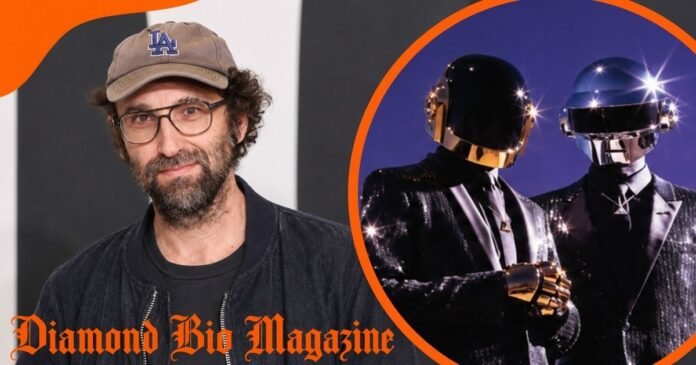

Search for “Thomas Bankalter” and you will quickly run into a small mystery. The name looks familiar, but something is slightly off. There is no major Daft Punk figure known by that spelling. The person most people are actually trying to find is Thomas Bangalter, the French musician who helped turn Daft Punk into one of the most recognizable acts in modern music.
Bangalter was born on 3 January 1975 in Suresnes, France. Long before the robot helmets and worldwide fame, he was simply a young musician developing an interest in sound, production and electronic music. His eventual partnership with Guy-Manuel de Homem-Christo would change the direction of both their careers.
For years, Daft Punk managed to achieve something very few artists can: they became globally famous while revealing surprisingly little about themselves. Their helmets became instantly recognizable, their songs reached millions of listeners, and yet the people behind the characters remained deliberately distant from the usual celebrity spotlight.
That mystery is still part of the fascination today. So, who is Thomas Bangalter, why does the name “Thomas Bankalter” appear in searches, and what happened to the musician after Daft Punk came to an end?
Quick Bio
| Field | Details |
|---|---|
| Full Name | Thomas Bangalter |
| Common Search Term | Thomas Bankalter |
| Date of Birth | 3 January 1975 |
| Birthplace | Suresnes, France |
| Profession | Musician, Producer and Composer |
| Best Known For | Daft Punk |
| Music Partner | Guy-Manuel de Homem-Christo |
| Nationality | French |
Thomas Bankalter or Thomas Bangalter?
Let’s clear up the most obvious question first.
Thomas Bankalter is not the correct spelling of the musician’s name. The correct name is Thomas Bangalter.
The mistake is easy to understand. The two surnames look almost identical, and anyone hearing the name rather than seeing it written down could easily remember “Bankalter.”
Bangalter was born in France in 1975 and grew up around music. His father, Daniel Vangarde, was a songwriter and producer, so music was already part of his surroundings while he was growing up.
His own musical journey became more serious during his teenage years. It was around this period that he met Guy-Manuel de Homem-Christo at school in Paris.
The two quickly discovered that they shared similar musical interests. They eventually formed a guitar group called Darling, although the band did not last very long.
What might have looked like a short-lived teenage music project at the time turned out to be the beginning of something much bigger.
By the early 1990s, Bangalter and Guy-Manuel were moving towards electronic music. In 1993, Daft Punk was formed.
Neither of them could have known exactly how far that decision would take them.
How Daft Punk Made Thomas Bangalter Famous
Daft Punk emerged during a period when French house music was beginning to attract international attention.
Their early music was energetic and heavily rooted in dance culture, but there was always something slightly different about it. Bangalter and Guy-Manuel were interested in rhythm and repetition, but they were equally interested in melody, sampling and production.
Their debut album, Homework, arrived in 1997.
The record introduced Daft Punk to a much larger audience and produced tracks such as “Around the World” and “Da Funk.” Instead of trying to make electronic music sound like traditional pop, the duo found ways to make club music feel accessible to people who might never normally listen to it.
Then came Discovery in 2001.
That album changed the conversation around Daft Punk. The music was brighter, more melodic and more openly influenced by disco, funk and pop. “One More Time” became one of the duo’s signature songs, while tracks such as “Harder, Better, Faster, Stronger” later became part of their lasting musical legacy.
Bangalter was no longer simply a French electronic producer. He was becoming part of a much bigger cultural movement.
Why Did Thomas Bangalter Hide Behind a Robot Helmet?
This is where the story becomes particularly interesting.
As Daft Punk became more successful, Bangalter and Guy-Manuel did not respond by becoming more visible. They did almost the opposite.
The duo adopted their famous robot appearance, with helmets that concealed their faces. Over time, those helmets became inseparable from the Daft Punk name.
For fans, it created an unusual situation. They could recognize the artists instantly, but they could not easily see them as ordinary people.
The decision also gave Daft Punk a sense of fantasy. Their music videos, artwork, live shows and public appearances all seemed to exist inside the same futuristic world.
Bangalter once again became less important than the character.
That may sound strange for a musician, but it was one of the reasons Daft Punk stood apart from so many other successful acts. The audience was encouraged to focus on the music rather than constantly following the private lives of the people who made it.
And the strategy worked.
The less the public knew, the more curious people became.
From French House to “Get Lucky”
By the time Random Access Memories arrived in 2013, Daft Punk had moved far beyond their early French house roots.
The album was deliberately broad in its musical influences. It included musicians from different generations and brought together electronic production with live instruments, disco, funk and pop.
One of the biggest results was “Get Lucky,” featuring Pharrell Williams and Nile Rodgers.
The song became a global hit and introduced Daft Punk’s sound to listeners who may never have heard their earlier club records.
The album also brought the duo major recognition at the GRAMMY Awards. Random Access Memories won Album of the Year and Best Dance/Electronica Album, while “Get Lucky” received awards including Record of the Year.
For Bangalter, it was a remarkable point in a career that had started in the French electronic scene.
The music had travelled a very long way.
Thomas Bangalter Was More Than a Daft Punk Producer
It is easy to think of Bangalter only in terms of Daft Punk, but his creative work has never been limited to the duo.
One of the clearest examples is Tron: Legacy, the 2010 science-fiction film. Bangalter and Guy-Manuel composed the film’s soundtrack, allowing them to explore a much more cinematic style.
The project suited Daft Punk surprisingly well. Their futuristic image already felt connected to science fiction, while their electronic sound could be expanded with orchestral arrangements and large cinematic themes.
The soundtrack showed another side of Bangalter’s musical interests.
He was not simply interested in making songs for clubs. He was also interested in atmosphere, composition and the relationship between sound and visual storytelling.
That interest became even more noticeable later in his career.
What Happened to Thomas Bangalter After Daft Punk?
In 2021, Daft Punk announced that they were ending their partnership.
For fans, the news felt like the closing of a very long chapter. The duo had been part of popular music for almost three decades, and their influence could be heard far beyond electronic music.
But Bangalter did not disappear.
Instead, he continued exploring music in a more personal and varied way. Without the Daft Punk name attached to every project, his work could be viewed from a different perspective.
He became involved in projects connected with composition, dance, film and contemporary art.
In 2026, Bangalter released Mirage – Ballet for 16 Dancers, a project associated with a ballet production. It is a useful example of how his creative interests have continued to develop after Daft Punk.
There is something fitting about that direction. For someone who spent years hiding behind a robot identity, his later career has allowed the music itself to become the main focus again.
Why Are People Still Searching for Thomas Bankalter?
The simplest answer is that Daft Punk never really left popular culture.
Even after the duo ended, their biggest songs remained familiar to new listeners. People continue discovering “One More Time,” “Get Lucky,” “Around the World” and “Harder, Better, Faster, Stronger” years after their original releases.
Naturally, that leads people to search for the musicians behind those songs.
Some remember the first name correctly but spell the surname as “Bankalter.” Others may have heard the name spoken and simply guess at the spelling.
That is why Thomas Bankalter continues to appear as a search term.
Once someone searches for the name, however, the trail usually leads back to Thomas Bangalter.
And there is plenty to discover. His story covers the rise of French house, the transformation of Daft Punk into a global phenomenon, the decision to embrace anonymity, major collaborations, film composition and a creative life after the duo.
The spelling may be wrong, but the person behind the search is very real.
Also read: Who Is Taelyn Dobson? The Private Stepsister of Nick and Aaron Carter
Conclusion
There is a simple answer to the mystery behind Thomas Bankalter: the spelling is wrong, but the search is usually pointing towards Thomas Bangalter.
What makes Bangalter’s story interesting is everything that came after that correction. He was one of the musicians who helped take French electronic music from the club scene to a worldwide audience, while simultaneously creating one of the most mysterious identities in modern pop culture.
With Guy-Manuel de Homem-Christo, he built Daft Punk around great music, striking visuals and a deliberate distance from ordinary celebrity culture. The helmets became iconic, but they also kept the focus on the work.
Daft Punk eventually came to an end, yet Bangalter’s musical journey did not. His later projects reveal an artist still interested in exploring sound, composition and new forms of creative expression.
So, if you arrived here searching for Thomas Bankalter, remember the name that belongs to the musician: Thomas Bangalter. The spelling may be a small detail, but behind it is the story of one of electronic music’s most distinctive and influential figures.
Frequently Asked Questions
Is Thomas Bankalter his real name?
No. The correct spelling is Thomas Bangalter. “Thomas Bankalter” is an incorrect spelling commonly used in online searches.
Who is Thomas Bangalter?
Thomas Bangalter is a French musician, producer and composer. He is best known as one half of Daft Punk, alongside Guy-Manuel de Homem-Christo.
When was Thomas Bangalter born?
He was born on 3 January 1975 in Suresnes, France.
How did Thomas Bangalter become famous?
He became internationally known through Daft Punk. The duo’s albums Homework, Discovery and Random Access Memories helped establish their worldwide reputation.
What is Thomas Bangalter best known for?
He is best known for his work with Daft Punk and songs including “One More Time,” “Around the World,” “Harder, Better, Faster, Stronger” and “Get Lucky.”
Why did Daft Punk wear helmets?
The helmets became an important part of the duo’s artistic identity. They also helped Bangalter and Guy-Manuel keep their personal identities away from the constant attention that normally comes with global fame.
Is Daft Punk still together?
No. Daft Punk announced their split in 2021 after nearly 30 years as a duo.
What is Thomas Bangalter doing now?
Bangalter continues to work on music and creative projects outside Daft Punk. His later work has included composition, collaborations and projects connected with dance and the arts, including Mirage – Ballet for 16 Dancers in 2026.