
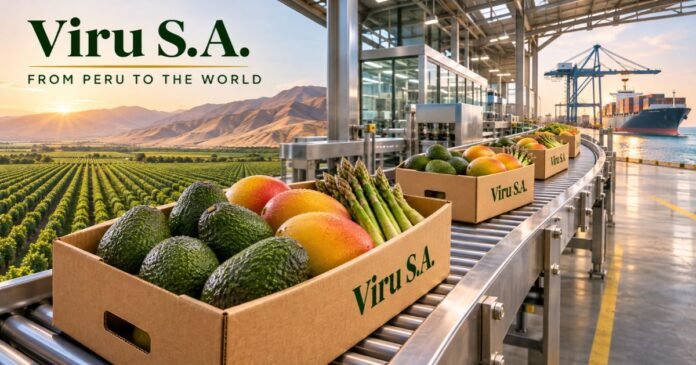

A bag of frozen mango, a jar of artichokes and a ready-to-eat quinoa meal may look like completely different purchases. Behind them, however, lies the same challenge: getting agricultural products from the field to the customer in a form that’s safe, convenient and consistently good.
Viru S.A. has built its business around that connection. Founded in 1994 and headquartered in Virú, La Libertad, Peru, the company operates internationally as Viru Group. Its activities cover fresh produce, frozen foods and preserved products, serving both business customers and consumers. The group says its reach extends to more than 50 countries across five continents.
What makes the company interesting is how closely it connects farming with food manufacturing. Growing crops is one part of the operation; processing, product development and international distribution help turn those harvests into a much wider range of foods.
For readers exploring Peruvian agricultural exports, the company offers a useful example of how a grower can develop into an international food business. Its story brings together practical production decisions, a varied product range and expansion into overseas markets.
How Viru S.A. Built Its Agricultural Business
The company began with a much narrower focus than its current portfolio suggests. In a July 2026 interview, CEO Yoselyn Malamud Kessler described an operation that initially cultivated 150 hectares of white asparagus.
That early concentration also created risks. Malamud explained that El Niño severely affected the business in 1997 and 1998, when it depended heavily on one crop and one export market, Spain. The experience helped shape a strategy of spreading operations across different crops, regions, markets and product formats.
The lesson is straightforward. A business tied to one harvest has fewer options when weather disrupts production. Selling several crops in different forms can create more routes to market, although it also makes the operation more complex.
By July 2026, Malamud reported more than 14,000 hectares under cultivation and 19,000 employees. These are dated figures from the CEO’s interview, rather than a permanent measure of the company’s size.
For Viru S.A., that development reflects a broader shift from growing individual crops towards managing a food business with several sources of demand.
A Product Range Built Around Different Ways to Eat
The group organises its business into three main lines: fresh, frozen and preserved foods. Each serves a different purpose, from produce sold for immediate use to ingredients that customers can keep for longer.
Fresh Produce
The company’s website lists avocados, green asparagus, white asparagus and blueberries among its fresh products. This side of the business centres on delivering produce with the appearance, condition and freshness buyers expect.
For a fresh produce exporter, the work continues after harvesting. Packing schedules, transport arrangements and delivery timing all need to fit together. A successful crop still needs careful handling before it reaches a shop or restaurant.
Frozen Fruits and Vegetables
Frozen foods give customers another way to use agricultural ingredients. Viru’s listed frozen fruit range includes mango, avocado, pineapple, strawberries and blueberries. Its website also describes the use of individually quick-frozen technology, commonly called IQF.
IQF freezes individual pieces separately. In practical terms, that can make it easier to take out a portion rather than thaw an entire pack. Think of mango pieces for a smoothie or fruit portions for a café’s breakfast service.
The appeal is convenience and flexibility. Customers can choose a format that suits their storage space, preparation routine and expected demand.
Preserved Foods and Ready Meals
Preserved vegetables remain an important part of the business. Its product listings include artichokes, asparagus, piquillo peppers and hearts of palm. The wider range also covers sauces, quinoa products and prepared meals.
These products move the company further into everyday meal preparation. A jar of vegetables can become a quick lunch ingredient, while a prepared quinoa dish reduces the work needed to assemble a meal.
That variety helps explain why the group’s activities extend beyond conventional farming. Processing and recipe development create additional uses for agricultural ingredients.
Why Its Integrated Production Model Matters
Vertical integration is central to the company’s approach. Viru Group describes processing facilities built next to its fields and an operation that connects agricultural production with food processing. It serves both B2B and B2C markets, linking this production model with different customer needs.
For buyers, the value of that arrangement is practical. Closely connected operations can make communication between growing and processing teams more direct. Harvest planning can take account of factory requirements, while product specifications can inform decisions earlier in production.
Consider a vegetable intended for a prepared dish. The processor may need a particular size, texture or cut. Coordinating those requirements across the supply chain can help reduce avoidable mismatches.
Food traceability is another important consideration. Buyers need clear records of where ingredients came from and how they were handled. Integration can support that process, but reliable records, testing and effective management still matter.
Viru S.A. also lists several standards through its 2026 SIAL Paris exhibitor profile, including BRCGS Food Safety, IFS Food, ISO 14001, organic and kosher credentials. Buyers should confirm the current certificate and its scope for the specific facility and product they intend to purchase.
International Expansion and Resource Management
A significant step in the group’s overseas expansion came in September 2023, when Superior Foods International announced its acquisition by Viru Group.
Based in Watsonville, California, Superior Foods supplies frozen vegetables, fruits and other frozen products to retail, foodservice and industrial customers. The announcement said the two businesses had already worked together for more than a decade.
The commercial logic is clear: agricultural production and processing become more useful when supported by established customer relationships and market knowledge. The acquisition connected Viru’s operations more closely with a business already serving American buyers.
Growth also brings attention to how resources are used. In her July 2026 interview, Malamud described initiatives involving composting organic material, producing avocado oil from rejected avocados and making asparagus flour from processing by-products.
These examples show where sustainable agriculture and manufacturing can meet. Materials left over from one process may become inputs for another. Assessing the results still requires measurable information about waste, water, energy and working conditions over time.
Conclusion
Viru S.A. brings together farming, processing and international distribution across fresh, frozen and preserved foods. Its development shows how a focused agricultural operation can build a broader business through product variety and access to overseas customers.
For buyers and industry readers, the most useful detail is how those activities connect. Understanding the production model, product specifications and supporting documentation gives a clearer picture than size or promotional claims alone.
FAQs
What does Viru S.A. produce?
Its range includes fresh fruits and vegetables, frozen produce, preserved vegetables, sauces and prepared foods such as quinoa meals.
Where is the company based?
The company is headquartered in Virú, in Peru’s La Libertad region.
When was the company founded?
It was founded in 1994, initially focusing on white asparagus cultivation.
What does IQF mean?
IQF stands for individually quick frozen. It describes freezing separate pieces of food individually, helping make portions easier to handle.
Does the group serve business customers?
Yes. It operates in B2B and B2C markets, supplying business customers as well as consumer-facing products.
When did it acquire Superior Foods International?
The acquisition was announced in September 2023, following a business relationship lasting more than a decade.